Championing Motor Vehicle Accident Claims: Expert Legal Support

In this article (14 sections)
- Chennai and India Jurisdiction Considerations
- Police Station and Accident Documentation
- Insurance Claims and Liability Disputes
- Proving Negligence Under Current Criminal Law
- Medical Expenses, Disability and Income Loss
- Death Claims and Family Compensation
- Permanent Disability and Future Earning Capacity
- MACT Proceedings and Tribunal Representation
- Appeals, Recovery and Enforcement
- Alternative Settlement and Negotiation Strategies
- Documents Every Accident Victim Should Preserve
- Legal Services Available Through the Claim Process
- Choosing an Experienced Motor Accident Lawyer
- Frequently Asked Questions
Championing Motor Vehicle Accident Claims - Motor accident compensation can address death, bodily injury and third-party property damage arising from vehicle use. The Motor Vehicles Act, 1988 provides the principal statutory framework for these claims. Section 165 enables State Governments to constitute Motor Accident Claims Tribunals for eligible disputes. Section 166 permits applications by injured persons, property owners, legal representatives and authorised agents. Therefore, victims should preserve medical records, accident details, insurance information and income evidence immediately. Additionally, family members should document funeral expenses and dependency where death occurs. Legal support can identify liable parties, applicable insurance coverage and suitable compensation heads. In Chennai, jurisdiction may involve the appropriate Motor Accident Claims Tribunal based on statutory territorial rules. Across India, the correct tribunal depends upon the applicable jurisdictional provisions. Consequently, early legal assessment can prevent procedural mistakes. Rajendra Civil Law Firm can assist clients with evidence collection, pleadings, negotiations, tribunal proceedings and appellate remedies.
Championing Motor Vehicle Accident Claims: Expert Legal Support - Rajendra Civil Law Firm
Common Motor Accident Legal Issues
Motor vehicle accident disputes can involve negligence, contributory negligence, insurance coverage, licence violations and vehicle ownership. Injured claimants may also face disputes involving medical expenses, disability, future earnings and rehabilitation costs. Fatal accidents create additional questions concerning dependency, age, income and consortium-related compensation. Property damage claims require appropriate proof of ownership, damage and repair costs. Moreover, hit-and-run incidents involve distinct statutory provisions and compensation mechanisms. Insurers may contest liability through policy conditions, permit issues or alleged driver violations. However, every defence requires careful examination against the evidence and governing law. Police records can become important when establishing accident circumstances and criminal allegations. Medical certificates can establish injury severity, treatment duration and permanent disability. Witness statements, photographs, CCTV footage and vehicle inspection reports can strengthen factual proof. Therefore, comprehensive legal preparation remains essential before settlement or tribunal adjudication.
Chennai and India Jurisdiction Considerations
Jurisdiction determines where an accident compensation application should proceed. Section 166 permits a claimant to approach specified Claims Tribunals based on statutory territorial alternatives. For Chennai clients, lawyers should identify the competent local Motor Accident Claims Tribunal before filing. Similarly, claims elsewhere in Tamil Nadu require district-specific tribunal identification. Across India, the accident location, claimant residence and respondent residence can influence forum selection. Importantly, Section 175 restricts ordinary civil court jurisdiction over matters assigned to Claims Tribunals. Therefore, filing strategy should distinguish MACT proceedings from ordinary civil suits. Appeals against tribunal awards follow the statutory appellate framework under Section 173. Furthermore, lawyers should examine limitation requirements and current procedural rules before filing. Clients should also preserve address evidence, vehicle documents and insurance details supporting territorial jurisdiction. Consequently, jurisdictional planning can reduce objections, delays and unnecessary litigation expenses.
Building a Strong Accident Compensation Case
Evidence, Police Action and Insurance
Police Station and Accident Documentation
Police documentation often forms an important evidentiary foundation for accident litigation. Victims should promptly report serious accidents to the appropriate nearby police station. Under BNSS, information concerning cognizable offences is governed by Section 173, while investigation powers appear under subsequent provisions. Accident cases involving death can also trigger statutory police inquiry requirements concerning the circumstances of death. Accordingly, clients should obtain relevant FIR, complaint, accident report and investigation records whenever legally available. Photographs of vehicles, roads, injuries and surrounding conditions can preserve valuable evidence. CCTV footage should receive prompt attention because retention periods can vary. Additionally, witnesses should record accurate contact details without coaching their statements. Police investigation may also identify the driver, registered owner and vehicle insurance information. However, compensation proceedings and criminal proceedings serve different legal purposes. Therefore, lawyers should coordinate both processes while maintaining the claimant’s independent compensation strategy.
Insurance Claims and Liability Disputes
Motor accident insurers frequently participate directly in compensation proceedings before Claims Tribunals. Section 168 authorises the Tribunal to determine just compensation and identify parties responsible for payment. Lawyers should examine the insurance policy, certificate, vehicle registration and driver’s licence. They should also investigate alleged policy breaches before accepting an insurer’s liability objection. A claimant should avoid signing settlement documents without understanding their legal consequences. Furthermore, incomplete disclosure can create unnecessary disputes concerning damages and coverage. Important documents may include hospital bills, prescriptions, disability certificates, salary records and bank statements. Property claims may require estimates, invoices, photographs and vehicle ownership records. Meanwhile, insurers may scrutinise income, treatment necessity and alleged contributory negligence. Consequently, legal review should occur before settlement negotiations become final. Rajendra Civil Law Firm can assess insurer correspondence, calculate compensation components and prepare appropriate tribunal pleadings. Proper documentation can significantly improve clarity during negotiations and adjudication.
Proving Negligence Under Current Criminal Law
Criminal liability can arise alongside a motor accident compensation claim. The BNS, 2023 replaced the Indian Penal Code framework from July 2024, subject to notified provisions. Section 281 addresses rash driving or riding on public ways. Section 106 addresses causing death by negligence, with statutory consequences depending upon the circumstances. However, criminal prosecution and civil compensation require separate legal analysis. A compensation claimant should establish facts supporting negligence, causation and resulting loss. Police investigation can provide important factual material, but tribunal evidence requires careful presentation. Moreover, BSA provisions now govern evidentiary questions in judicial proceedings. Electronic records receive statutory recognition under Sections 61 to 63, subject to applicable requirements. Thus, CCTV, dashcam footage, photographs and digital communications may become valuable evidence. Lawyers should preserve original sources and document the evidence chain wherever practicable.
Calculating and Claiming Appropriate Compensation
Medical Expenses, Disability and Income Loss
Accident compensation should reflect the claimant’s actual and reasonably foreseeable financial consequences. Medical expenses may include emergency treatment, hospitalisation, surgery, medicines and rehabilitation. Future treatment can also require appropriate supporting medical evidence. Permanent disability may affect earning capacity beyond immediate physical impairment. Therefore, disability assessment should distinguish physical disability from functional impact on employment. Income evidence can include salary certificates, tax records, employment records and bank statements. Self-employed claimants may need business records, tax returns and other credible evidence. Additionally, household contributions can become relevant when assessing certain dependency circumstances. Lawyers should identify appropriate compensation heads rather than relying upon a single aggregate estimate. The Tribunal ultimately determines just compensation under the governing statutory framework. Consequently, evidence should connect every claimed amount with the accident’s consequences. Careful calculation can help prevent undervaluation during insurer negotiations or tribunal proceedings.
Death Claims and Family Compensation
Fatal motor accidents create substantial legal and financial consequences for surviving family members. Section 166 expressly permits legal representatives to pursue compensation where death results from an eligible accident. Families should preserve death certificates, medical records, income evidence and relationship documents. Dependency evidence can help establish the financial contribution made by the deceased. Funeral and related expenses should also receive appropriate documentary support. Moreover, compensation may involve several recognised heads depending upon applicable law and judicial principles. Lawyers should identify all eligible legal representatives before preparing the claim petition. Section 166 also addresses situations where some legal representatives do not join the application. Therefore, family composition requires careful verification before filing. Insurance negotiations should not overlook long-term financial dependency. Consequently, professional legal assistance can help families present a complete and legally sustainable compensation case.
Permanent Disability and Future Earning Capacity
Permanent disability claims require detailed evidence because injury can permanently change earning capacity and lifestyle. Medical disability percentages alone may not establish the complete economic impact. Lawyers should examine the claimant’s occupation, skills, age, education and functional limitations. For example, a physical impairment can affect a manual worker differently from an office professional. Therefore, evidence should connect disability with actual occupational consequences. Medical specialists can provide relevant functional assessments and future treatment opinions. Employment records may demonstrate reduced duties, lost promotions or inability to continue previous work. Additionally, self-employed persons should provide credible business and income records. The Tribunal evaluates evidence while determining just compensation under the Motor Vehicles Act. Consequently, compensation calculations should avoid unsupported assumptions. Rajendra Civil Law Firm can coordinate medical, financial and documentary evidence for a coherent claim. This approach can strengthen arguments concerning loss of earning capacity, treatment requirements and long-term financial hardship.
Tribunal Litigation and Legal Remedies
MACT Proceedings and Tribunal Representation
Motor Accident Claims Tribunals provide the principal statutory forum for qualifying vehicle accident compensation disputes. Section 165 empowers States to constitute these specialised tribunals. Tribunal proceedings generally require pleadings, evidence, documents, witness examination and legal submissions. The insurer, vehicle owner and driver may become relevant respondents depending upon the facts. Lawyers should prepare the claim petition with accurate accident, injury, income and dependency details. They should also anticipate objections concerning negligence, policy coverage and contributory fault. Furthermore, documentary evidence should correspond with the compensation amounts claimed. Section 169 gives Claims Tribunals procedural powers for conducting inquiries. Therefore, representation requires both procedural knowledge and evidence strategy. Clients should receive clear advice regarding settlement offers before accepting them. Effective advocacy can protect legitimate compensation interests throughout the tribunal process.
Appeals, Recovery and Enforcement
An unfavourable award does not necessarily end the legal remedy available to an affected party. Section 173 provides a statutory appeal mechanism against qualifying Claims Tribunal awards. Lawyers should examine the award carefully before deciding whether an appeal has reasonable legal grounds. Potential issues may involve negligence findings, compensation calculation, liability allocation or evidentiary treatment. Additionally, successful claimants may need assistance enforcing an award when payment does not occur. Section 174 addresses recovery of awarded amounts through specified mechanisms. Therefore, legal support can continue beyond the judgment stage. Clients should promptly obtain certified copies and monitor applicable filing periods. Meanwhile, appellate strategy should focus on demonstrable legal or factual errors. Consequently, professional advice can help determine whether appeal, enforcement or settlement represents the most effective remedy. Each case requires assessment based on its evidence, award and governing law.
Alternative Settlement and Negotiation Strategies
Settlement can provide a practical resolution when the proposed compensation fairly reflects the claimant’s legal entitlement. Lawyers should first assess liability, insurance coverage, medical evidence and likely tribunal compensation. They should then evaluate the insurer’s offer against documented losses and applicable legal principles. However, speed alone should not determine whether settlement is advisable. A premature settlement can overlook future treatment, disability or long-term income loss. Therefore, clients should understand every settlement term before signing. Negotiations may involve medical expenses, disability consequences, income loss and other legally recoverable components. Additionally, lawyers can identify disputed facts requiring stronger documentary evidence. Mediation or negotiated resolution may reduce litigation time where parties genuinely seek compromise. Nevertheless, settlement should preserve the claimant’s informed consent and legal interests. Rajendra Civil Law Firm can review offers, negotiate with insurers and advise clients about tribunal litigation risks. A structured settlement strategy can therefore balance recovery, certainty and procedural efficiency.
Practical Legal Support for Every Claimant
Client-Focused Accident Claim Management
Documents Every Accident Victim Should Preserve
Strong documentation helps lawyers convert an accident narrative into a legally supportable compensation claim. Clients should preserve the following records as early as possible:
- FIR, police complaint, accident report and investigation documents.
- Medical records, bills, prescriptions and disability certificates.
- Driving licence, registration certificate and insurance policy details.
- Salary records, income-tax documents and bank statements.
- Photographs, CCTV footage, dashcam files and witness information.
- Death certificate, relationship documents and dependency evidence.
- Repair estimates, invoices and vehicle ownership records.
Digital evidence deserves particular care because BSA Sections 61 to 63 address electronic records and admissibility requirements. Furthermore, clients should retain original files and avoid unnecessary editing. Lawyers can organise these materials into an evidence chronology. This preparation can strengthen pleadings, negotiations and tribunal submissions.
Legal Services Available Through the Claim Process
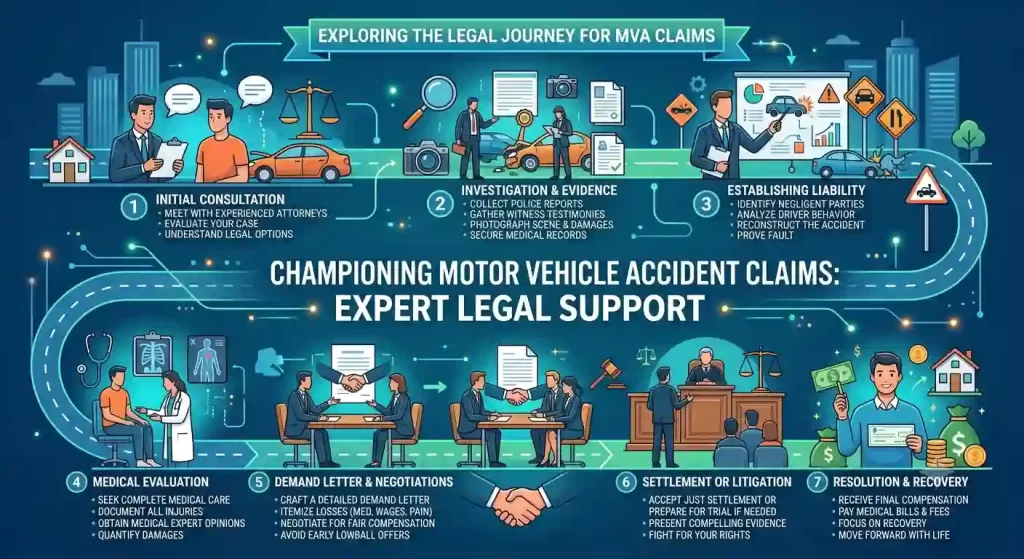
Comprehensive motor accident legal support should address the claim from initial advice through final recovery. Depending upon the case, services may include:
- Accident facts and jurisdiction assessment.
- Police-record and evidence review.
- Insurance policy and liability analysis.
- Medical and disability evidence assessment.
- Compensation calculation and claim preparation.
- MACT filing and tribunal representation.
- Settlement negotiation and mediation support.
- Appeal advice and award enforcement.
Additionally, lawyers can coordinate documentation with insurers, hospitals and relevant authorities. Clients may need assistance when insurers delay responses or dispute liability. Families facing fatal accidents may require especially careful guidance concerning legal representatives and dependency evidence. Therefore, the legal strategy should match the claimant’s circumstances. Rajendra Civil Law Firm can provide representation tailored to individuals, families, businesses and other affected clients. Professional support can reduce procedural errors while keeping the claimant informed about available remedies.
Choosing an Experienced Motor Accident Lawyer
Selecting suitable legal counsel can materially affect how effectively an accident claim progresses. Clients should consider experience with MACT proceedings, insurance disputes and accident evidence. Chennai claimants may benefit from counsel familiar with local tribunals, courts, police procedures and Tamil Nadu practice. India-wide matters may require broader knowledge of jurisdictional and procedural variations. Furthermore, lawyers should explain likely remedies without guaranteeing a particular compensation amount. They should identify evidence weaknesses and recommend practical steps for improvement. Clear communication also helps clients understand hearings, settlement proposals and procedural deadlines. Importantly, legal advice should distinguish compensation proceedings from criminal prosecution. The BNS and BNSS now govern relevant criminal-law and procedure issues from the current statutory framework. Meanwhile, BSA governs evidentiary treatment in judicial proceedings. Therefore, integrated legal analysis can provide stronger guidance.
Frequently Asked Questions
Can I file a motor accident compensation claim without an FIR
An FIR can be important evidence, but each case requires individual legal assessment. Seek advice promptly.
Which tribunal handles a Chennai accident claim
The competent MACT depends on statutory jurisdiction. A lawyer should identify the correct Chennai forum before filing.
Can family members claim after a fatal accident
Yes, eligible legal representatives can pursue compensation under Section 166, subject to statutory requirements.
Can I challenge an MACT award
Section 173 provides a statutory appeal mechanism for qualifying awards. Obtain legal advice quickly after receiving the award.
Can CCTV footage support my accident claim
Yes, electronic evidence can be relevant. BSA Sections 61 to 63 govern electronic-record admissibility requirements.
What compensation can an accident victim seek
Depending upon circumstances, claims can address medical costs, disability, income loss, dependency, property damage and other legally recognised losses.
Conclusion: Protecting Your Compensation Rights
Motor vehicle accident claims require coordinated attention to evidence, insurance, jurisdiction, compensation and procedural strategy. The Motor Vehicles Act remains central to compensation claims before designated Claims Tribunals. Meanwhile, BNS, BNSS and BSA govern relevant criminal, procedural and evidentiary issues. Therefore, accident victims should act promptly after injury, death or property loss. Police records, medical evidence and digital materials can significantly influence the factual presentation. Additionally, insurance negotiations require careful scrutiny before any settlement becomes final. Tribunal representation can address compensation disputes, while statutory appeals can challenge qualifying adverse awards. Award enforcement may also require further legal action when payment remains outstanding. For Chennai and India-wide clients, Rajendra Civil Law Firm provides legal guidance focused on protecting legitimate accident compensation rights. Early legal consultation can help identify the correct forum, evidence, remedy and litigation strategy for each individual case.
Read More
- Motor Accidents Claim Tribunal: Fighting for Your Rights
- Pursuing Medical Malpractice Claims: Expert Legal Representation
- Media Law and Disputes: Expert Legal Counsel You Can Count On
- Marriage Registration Made Simple: Expert Legal Assistance
- Resolving Marine Disputes: Expert Legal Guidance
- Ministry of Road Transport & Highways (MoRTH)
This article is part of our guide: Consumer Complaints in Chennai: Find the Best Reliable Advocate.