Expert Legal Representation for Labor Issues
In this article (4 sections)
Legal Representation for Labor Issues - Labor disputes require timely legal action, strategic advice, and complete statutory compliance. Rajendra Civil Law Firm: Best Civil Advocates provides practical legal representation for employees, employers, industries, contractors, startups, NGOs, and multinational companies. Our lawyers handle wrongful termination, wage disputes, industrial conflicts, workplace harassment, disciplinary proceedings, service matters, employment contracts, and labor law compliance. Moreover, we represent clients before Labour Courts, Industrial Tribunals, High Courts, District Courts, and government authorities. Our legal team studies every document carefully before suggesting suitable remedies. We also coordinate with Labour Departments, Police Stations, Conciliation Officers, and statutory authorities whenever necessary. Early legal guidance reduces financial risks and preserves valuable employment relationships. Therefore, our lawyers focus upon lawful, practical, and cost-effective dispute resolution while protecting every client’s legal rights.
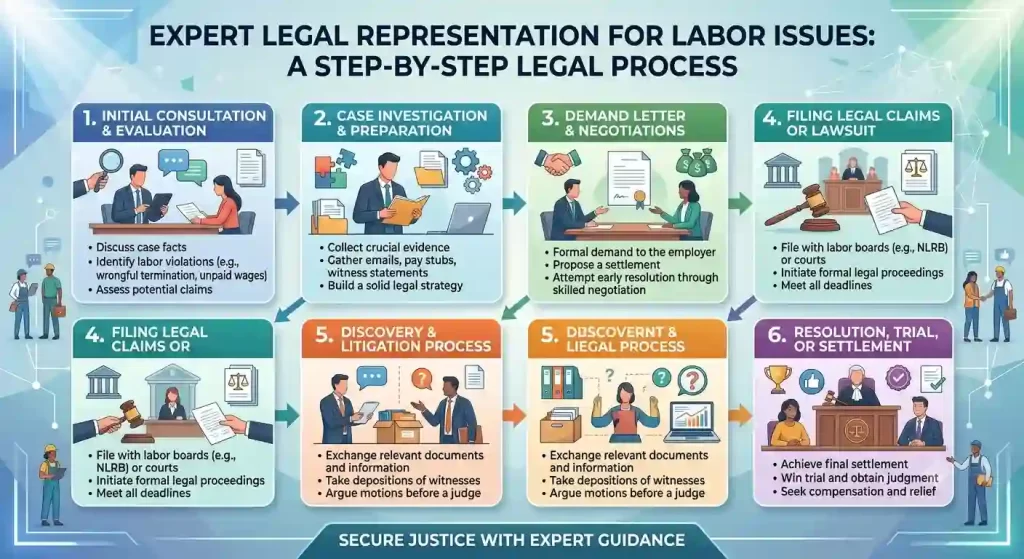
Expert Legal Representation for Labor Issues - Rajendra Civil Law Firm: Best Civil Advocates
Common Labor Issues Requiring Immediate Legal Assistance
Employment disputes arise across every sector because workplace relationships involve legal obligations. Therefore, experienced advocates help clients resolve disputes through negotiation, mediation, litigation, or statutory proceedings. Common matters include:
- Wrongful termination
- Illegal dismissal
- Salary recovery
- Bonus disputes
- Gratuity claims
- Provident Fund disputes
- ESI disputes
- Contract labour issues
- Workplace harassment
- Discrimination complaints
- Industrial disputes
- Trade union matters
- Retrenchment compensation
- Layoff disputes
- Suspension challenges
- Domestic enquiry proceedings
- Service benefits
- Leave encashment
- Employment agreements
- Non-compete disputes
| Party | Common Legal Issue | Available Remedy |
|---|---|---|
| Employee | Illegal termination | Reinstatement or compensation |
| Employer | Misconduct | Domestic enquiry |
| Contractor | Contract dispute | Civil proceedings |
| Union | Collective bargaining | Industrial dispute |
Employee Rights Under Indian Labor Laws
Indian labor legislation safeguards dignity, fair wages, and lawful employment conditions. Employees may seek legal remedies against unfair labour practices through competent forums. Furthermore, advocates evaluate appointment letters, wage records, disciplinary proceedings, attendance registers, and service documents before initiating legal action. Legal assistance strengthens claims involving unpaid salaries, illegal deductions, forced resignation, discrimination, and victimization. Employees may also approach Labour Commissioners, Conciliation Officers, Labour Courts, Industrial Tribunals, and High Courts depending upon jurisdiction. Our advocates prepare pleadings, evidence, witness statements, and legal submissions carefully. Proper legal strategy improves settlement opportunities while preserving statutory rights. Timely documentation prevents unnecessary procedural objections during litigation. Consequently, professional representation significantly improves legal outcomes throughout employment disputes.
Employer Compliance and Preventive Legal Support
Employers require continuous legal compliance to prevent expensive employment disputes and regulatory penalties. Our advocates review employment contracts, standing orders, HR policies, disciplinary procedures, wage structures, and statutory registers. Moreover, legal audits identify compliance gaps before authorities initiate inspections or prosecutions. Businesses receive practical advice regarding retrenchment, layoffs, disciplinary action, misconduct investigations, contract labour engagement, and workplace safety obligations. We also represent employers during inspections conducted by Labour Departments, EPFO, ESIC, and other regulatory authorities. Proper documentation strengthens defence during litigation and departmental proceedings. Therefore, preventive legal compliance reduces financial exposure while improving industrial harmony and operational stability.
Forums, Authorities and Jurisdiction for Labor Disputes
Labor matters follow statutory procedures before different authorities depending upon dispute nature. Initially, parties may participate in conciliation proceedings before the Labour Department. Subsequently, unresolved disputes may reach Labour Courts or Industrial Tribunals. Constitutional issues often reach High Courts through writ petitions. Civil Courts may entertain specific contractual disputes where statutory bars do not apply. Our advocates determine proper jurisdiction before initiating proceedings. Correct forum selection prevents procedural delays and jurisdictional objections. Relevant authorities include:
- Labour Commissioner
- Assistant Labour Commissioner
- Conciliation Officer
- Labour Court
- Industrial Tribunal
- High Court
- District Court
- EPFO Authorities
- ESIC Authorities
Legal Remedies Available for Labor Issues
Different employment disputes require different legal remedies under applicable statutes and judicial precedents. Therefore, advocates recommend remedies after evaluating facts and documentary evidence. Available remedies include:
- Reinstatement
- Salary recovery
- Back wages
- Compensation
- Gratuity payment
- Bonus recovery
- PF settlement
- ESI benefits
- Injunction
- Declaration
- Settlement agreement
- Mediation
- Conciliation
- Arbitration
- Writ petition
- Appeal
- Review petition
- Execution proceedings
Courts examine fairness, evidence, statutory compliance, and procedural legality before granting relief. Consequently, professionally drafted pleadings strengthen legal claims while minimizing unnecessary litigation risks.
Latest Legal Framework Applicable to Labor Disputes
Labor disputes involve several procedural and substantive laws alongside recent criminal procedural reforms wherever offences arise. Courts may also consider the Code of Civil Procedure, 1908 during civil proceedings involving employment contracts. Additionally, relevant provisions under the Bharatiya Nyaya Sanhita, 2023, Bharatiya Nagarik Suraksha Sanhita, 2023, and Bharatiya Sakshya Adhiniyam, 2023 apply whenever criminal allegations, investigations, or evidentiary issues arise. Important employment legislation includes the Industrial Disputes framework, Industrial Relations Code, Code on Wages, Code on Social Security, Occupational Safety, Health and Working Conditions Code, Payment of Gratuity principles, Employees’ Provident Fund provisions, and Employees’ State Insurance regulations. Therefore, experienced advocates coordinate civil, labour, constitutional, and criminal remedies whenever necessary.
Evidence Required in Labor Litigation
Strong documentary evidence significantly improves success before labour authorities and courts. Clients should preserve:
- Appointment letter
- Employment contract
- Salary slips
- Bank statements
- Attendance records
- Email communications
- Termination order
- Suspension order
- Charge memo
- Domestic enquiry records
- Identity card
- PF records
- ESI records
- Gratuity documents
- Witness details
Proper documentation supports legal arguments while reducing factual disputes. Furthermore, advocates verify authenticity before filing proceedings. Organized records also accelerate settlement discussions and judicial determination.
Nearby Police Stations and Government Departments
Certain labor disputes involve criminal intimidation, forgery, harassment, assault, cheating, or document fabrication. Therefore, advocates coordinate with nearby jurisdictional Police Stations whenever criminal complaints become necessary. Clients may also approach Labour Departments, Labour Commissioners, EPFO Offices, ESIC Branch Offices, District Legal Services Authorities, Women Commissions, Human Rights Commissions, and appropriate statutory regulators. Our legal team assists during complaint drafting, departmental hearings, inspections, mediation, and statutory inquiries. Proper legal representation prevents procedural mistakes and protects valuable evidence. Consequently, coordinated action before multiple authorities ensures comprehensive legal protection for both employees and employers.
Why Choose Rajendra Civil Law Firm: Best Civil Advocates
Our firm delivers personalized legal strategies supported by thorough legal research and practical courtroom experience. Every matter receives careful document review before litigation begins. Moreover, clients receive transparent legal advice regarding risks, timelines, jurisdiction, and possible remedies. We represent employees, employers, contractors, corporations, educational institutions, NGOs, startups, and manufacturing industries across diverse labor disputes. Our advocates emphasize negotiation whenever practical while remaining fully prepared for contested litigation. Timely legal intervention frequently reduces costs and protects professional relationships. Therefore, our comprehensive legal representation helps clients secure lawful, efficient, and commercially practical outcomes.
Our Legal Services for Labor Matters
Our labor law practice covers complete advisory, drafting, compliance, litigation, and appellate representation. Services include:
- Employment contract drafting
- Wrongful termination litigation
- Salary recovery cases
- Industrial dispute representation
- Domestic enquiry assistance
- Labour Court litigation
- Industrial Tribunal representation
- High Court writ petitions
- Compliance audits
- Gratuity disputes
- EPF disputes
- ESI disputes
- Trade union matters
- Settlement negotiations
- Arbitration support
Every case receives strategic planning based upon applicable laws, judicial precedents, and client objectives. Consequently, clients obtain practical legal solutions with dedicated professional representation.
Frequently Asked Questions
Q1. Can an employee challenge illegal termination Yes. Employees may approach Labour Authorities or Labour Courts seeking reinstatement, compensation, back wages, or other statutory relief after examining employment records.
Q2. Can employers legally dismiss employees Yes. Employers may dismiss employees after following lawful disciplinary procedures, contractual terms, natural justice principles, and applicable labour legislation.
Q3. Which court handles labour disputes Labour Courts, Industrial Tribunals, High Courts, and other competent forums hear disputes depending upon jurisdiction, statutory provisions, and dispute nature.
Q4. Can unpaid salary be recovered legally Yes. Employees may seek salary recovery through statutory authorities, Labour Courts, civil proceedings, or negotiated settlements based upon applicable laws.
Q5. Is legal notice necessary before litigation Many disputes benefit from legal notices because they encourage settlement and clarify legal claims before formal proceedings commence.
Q6. Why hire a labour advocate early Early legal advice protects evidence, prevents procedural mistakes, strengthens negotiations, ensures statutory compliance, and improves litigation outcomes.
Read More
- Protecting Intellectual Property: Expert Legal Counsel
- Insider’s Guide to Insolvency and Liquidation Proceedings
- Industrial Accident Claims: Championing Your Legal Rights
- Income Tax Litigation: Protecting Your Financial Interests
- Common Causes of Real Estate Disputes and Prevention Measures: A Complete Guide for Property Owners
- Ministry of Labour & Employment, Government of India
This article is part of our guide: Rajendra Civil Law Firm | Best Civil Lawyers in Chennai India 24x7.