Legal Separation Simplified: Expert Guidance You Can Trust
Legal Separation Simplified - Legal separation offers couples a structured solution before choosing divorce or reconciliation. It protects personal rights while allowing spouses to live separately under legal arrangements. Many families prefer this option because it reduces uncertainty during difficult situations. Moreover, legal separation helps resolve disputes involving maintenance, child custody, residence, and property management. Indian courts examine every case according to applicable personal laws and factual circumstances. The Code of Civil Procedure, 1908 (CPC) governs civil proceedings wherever applicable. Additionally, the Bharatiya Sakshya Adhiniyam, 2023 (BSA) regulates evidence during civil and connected proceedings. The Bharatiya Nagarik Suraksha Sanhita, 2023 (BNSS) and Bharatiya Nyaya Sanhita, 2023 (BNS) become relevant when domestic violence, cruelty, criminal intimidation, or related offences arise. Rajendra Civil Law Firm provides strategic legal guidance across Family Courts, District Courts, High Courts, mediation centres, and Lok Adalats. Therefore, early legal advice strengthens rights, reduces conflicts, and encourages practical settlements wherever possible.
Legal Separation Simplified: Expert Guidance You Can Trust - Rajendra Civil Law Firm
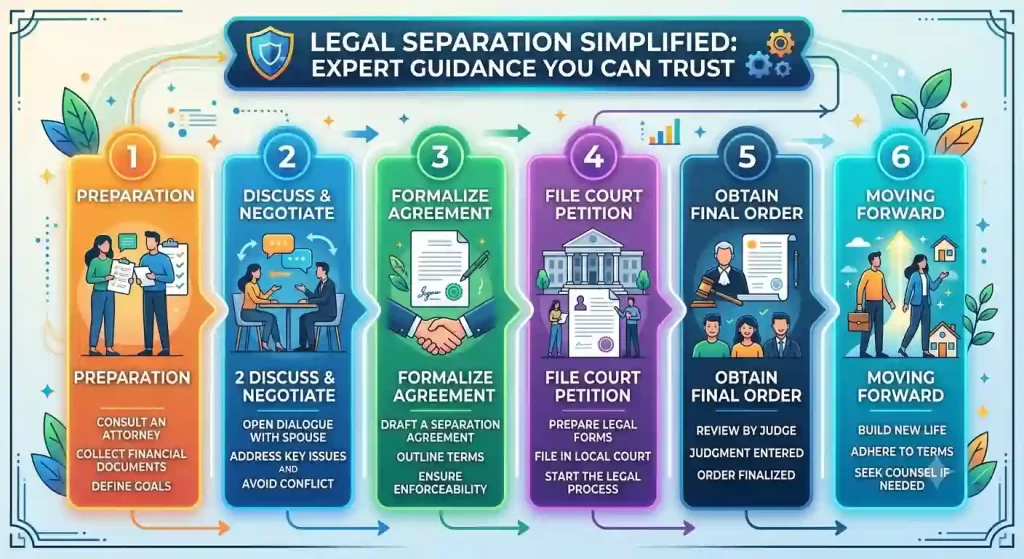
Why Legal Separation Benefits Many Families
Legal separation provides financial clarity while preserving important legal protections for spouses and children. Furthermore, courts may determine interim maintenance, child visitation, educational expenses, and residential arrangements during proceedings. Couples often select separation because it offers valuable time for thoughtful decisions. Family Courts encourage mediation before prolonged litigation whenever suitable. Consequently, negotiated settlements frequently reduce emotional stress and legal expenses. Common legal issues include domestic disputes, maintenance claims, child custody, guardianship, property possession, inheritance concerns, and matrimonial obligations. Lawyers also coordinate with protection officers, counselling centres, and mediation authorities whenever necessary. Important forums include Family Courts, District Courts, High Courts, Lok Adalats, and mediation centres. Clients receive assistance with documentation, pleadings, negotiations, evidence preparation, and court representation. Accordingly, professional legal support improves procedural compliance and protects long-term family interests under applicable Indian laws.
Common Grounds Supporting Legal Separation
Courts evaluate each separation request according to facts, evidence, and governing personal laws. Moreover, judges consider conduct, financial circumstances, children’s welfare, and documentary proof before granting appropriate relief. Typical grounds differ among applicable religious and personal statutes. Frequently encountered situations include:
- Cruelty and domestic disputes
- Desertion for statutory periods
- Adultery allegations requiring evidence
- Mental illness affecting marital life
- Financial neglect and maintenance disputes
- Religious conversion under applicable laws
- Communicable diseases where legally relevant
- Irretrievable marital breakdown during negotiations
Evidence may include financial records, communications, medical reports, witness testimony, and digital records admissible under the BSA, 2023. Therefore, clients should preserve every relevant document before initiating proceedings. Skilled advocates analyse jurisdiction, applicable statutes, procedural requirements, and available remedies before filing petitions. Such preparation increases efficiency and strengthens the client’s legal position throughout litigation.
Eligibility and Jurisdiction Before Filing
Jurisdiction plays a vital role in every legal separation proceeding. Generally, Family Courts hear matrimonial disputes where established under the Family Courts Act, 1984. Otherwise, competent District Courts exercise jurisdiction according to applicable law. Courts usually consider factors including marriage location, last shared residence, and current residence of either spouse. Additionally, High Courts supervise subordinate courts through constitutional powers whenever necessary. Jurisdictional errors may delay proceedings and increase litigation expenses. Professional legal advice prevents avoidable procedural mistakes before filing. Important authorities and forums include:
| Authority | Primary Role |
|---|---|
| Family Court | Matrimonial disputes |
| District Court | Civil matrimonial jurisdiction |
| High Court | Appeals and supervisory jurisdiction |
| Lok Adalat | Settlement opportunities |
| Mediation Centre | Alternative dispute resolution |
Therefore, selecting the correct forum ensures procedural efficiency and timely adjudication.
Documents Required for Legal Separation Proceedings
Accurate documentation significantly strengthens every matrimonial case before judicial authorities. Consequently, advocates carefully verify records before preparing petitions and supporting affidavits. Essential documents generally include:
- Marriage certificate or marriage proof.
- Identity and address documents.
- Children’s birth certificates.
- Income proof and salary records.
- Bank statements and tax documents.
- Property ownership documents.
- Medical records where relevant.
- Digital communications supporting claims.
- Police complaint copies, if applicable.
- Previous court orders or settlements.
Supporting evidence should remain complete, authentic, and legally admissible under the BSA, 2023. Lawyers also prepare affidavits, applications, vakalatnama, and supporting schedules before filing. Moreover, organized documentation reduces unnecessary adjournments and improves litigation efficiency. Proper preparation enables courts to examine disputes quickly while safeguarding procedural fairness for both parties.
Legal Remedies and Professional Support During Separation
Legal separation involves several remedies that protect spouses, children, and shared financial interests. Therefore, selecting the correct remedy depends upon facts, applicable personal laws, and available evidence. Courts may grant interim maintenance, permanent maintenance, child custody, visitation rights, residence protection, injunctions, and property-related relief. Additionally, parties may seek mediation before contested hearings begin. The Protection of Women from Domestic Violence Act, 2005 provides residence and protection orders where circumstances justify relief. The BNSS, 2023, BNS, 2023, and BSA, 2023 apply whenever criminal allegations accompany matrimonial disputes. Nearby Police Stations investigate cognizable offences, while Magistrate Courts hear criminal proceedings. Family Courts continue deciding matrimonial issues independently. Rajendra Civil Law Firm assists clients through consultation, drafting, negotiation, evidence preparation, mediation, appeals, and effective courtroom representation across every litigation stage.
Courts, Tribunals and Government Authorities Involved
Different authorities perform distinct functions during legal separation proceedings. Consequently, understanding their jurisdiction helps parties choose the appropriate legal forum. Common authorities include:
| Authority | Primary Function |
|---|---|
| Family Court | Separation, maintenance, custody |
| District Court | Matrimonial civil jurisdiction |
| High Court | Appeals and writ remedies |
| Supreme Court | Constitutional and appellate jurisdiction |
| Lok Adalat | Amicable settlements |
| Mediation Centre | Negotiated resolution |
| Police Station | Criminal complaint registration |
| Women Protection Cell | Assistance in domestic disputes |
Government departments and authorities may assist depending upon the dispute. These include the Department of Women and Child Development, Legal Services Authorities, Child Welfare Committees, and Registration Departments. Furthermore, free legal aid remains available for eligible litigants under the Legal Services Authorities Act, 1987. Proper legal guidance ensures timely access to every available statutory remedy.
Step-by-Step Legal Separation Process
Every legal separation matter follows a structured legal process. Initially, advocates assess facts, jurisdiction, and applicable laws before recommending suitable remedies. Thereafter, the process generally includes:
- Initial legal consultation.
- Document verification.
- Case strategy preparation.
- Drafting the petition.
- Filing before the competent court.
- Issue of court notice.
- Mediation or counselling.
- Evidence and witness examination.
- Final arguments.
- Judgment and enforcement.
- Appeal, when legally required.
Meanwhile, parties should comply with every interim court direction. Non-compliance may affect maintenance, custody, or procedural rights. Professional representation reduces procedural errors and improves overall case management. Early settlement also saves valuable time, legal expenses, and emotional stress. Therefore, experienced legal assistance remains essential throughout every stage of matrimonial litigation.
Practical Legal Remedies Available to Spouses
Courts provide several remedies according to individual circumstances and statutory provisions. Accordingly, advocates recommend solutions that best protect legal and financial interests. Common remedies include:
- Judicial separation.
- Mutual settlement agreements.
- Interim maintenance.
- Permanent alimony.
- Child custody orders.
- Child visitation arrangements.
- Residence protection.
- Domestic violence protection orders.
- Property injunctions.
- Recovery of belongings.
- Appeal against adverse orders.
- Mediation and negotiated settlements.
Where criminal conduct exists, parties may initiate proceedings under applicable provisions of the BNS, 2023, following procedures under the BNSS, 2023. Evidence remains governed by the BSA, 2023. Civil proceedings continue according to the CPC, wherever applicable. Consequently, coordinated civil and criminal strategies often provide comprehensive legal protection while safeguarding family interests and children’s welfare.
Why Choose Rajendra Civil Law Firm
Choosing experienced legal representation improves confidence during emotionally challenging matrimonial disputes. Moreover, professional advice minimizes procedural mistakes and strengthens every legal strategy. Rajendra Civil Law Firm provides comprehensive support for separation, maintenance, custody, mediation, property disputes, injunctions, appeals, and settlement negotiations. The firm represents clients before Family Courts, District Courts, High Courts, Lok Adalats, and mediation centres across appropriate jurisdictions. Services include legal notices, petition drafting, written statements, evidence analysis, document verification, witness preparation, and appellate advocacy. Every case receives careful legal evaluation based upon applicable statutes and judicial precedents. Furthermore, transparent communication keeps clients informed throughout proceedings. Practical solutions remain the firm’s priority whenever amicable settlement becomes possible. However, strong courtroom advocacy protects clients whenever contested litigation becomes unavoidable.
Conclusion
Legal separation provides an effective legal framework for resolving matrimonial disputes without immediately dissolving the marriage. Therefore, informed legal decisions protect financial stability, parental rights, personal safety, and future legal interests. Courts encourage fair settlements whenever possible while ensuring justice through due process. Modern legislation, including the BNS, 2023, BNSS, 2023, BSA, 2023, and the CPC, supports transparent legal procedures across appropriate forums. Clients should seek prompt legal advice before signing settlements or initiating litigation. Early preparation strengthens evidence, improves negotiation opportunities, and reduces avoidable delays. Rajendra Civil Law Firm delivers reliable legal guidance, strategic representation, and practical solutions for every stage of legal separation. Professional legal assistance helps families navigate complex disputes with confidence while protecting their rights under Indian law.
Frequently Asked Questions
1. What is legal separation in India Legal separation allows spouses to live separately while remaining legally married. Courts decide maintenance, custody, residence, and financial rights according to applicable personal laws and evidence.
2. Which court handles legal separation cases Family Courts usually hear legal separation matters. District Courts hear cases where Family Courts are unavailable. High Courts hear appeals against eligible matrimonial judgments.
3. Can legal separation include child custody and maintenance Yes. Courts may grant interim maintenance, permanent maintenance, child custody, visitation rights, educational expenses, and residence protection based on evidence and children’s welfare.
4. Which laws may apply during legal separation proceedings Applicable personal laws primarily govern separation. CPC regulates civil procedures. BSA governs evidence. BNS and BNSS apply where criminal allegations accompany matrimonial disputes.
5. Can spouses settle disputes without a lengthy trial Yes. Courts encourage mediation, counselling, and Lok Adalat settlements whenever possible. Mutual agreements often reduce litigation costs, delays, and emotional stress for families.
6. Why should I hire an experienced civil lawyer An experienced lawyer protects legal rights, prepares documents, presents evidence, handles negotiations, represents clients before courts, and develops effective strategies for favourable outcomes.
Read More
- Issuing Legal Notices: Expert Guidance for Effective Communication
- Expert Legal Representation for Labor Issues
- Protecting Intellectual Property: Expert Legal Counsel
- Insider’s Guide to Insolvency and Liquidation Proceedings
- Industrial Accident Claims: Championing Your Legal Rights
- National Legal Services Authority (NALSA)
This article is part of our guide: Expert Divorce Lawyers for the Best Family Court Legal Services.