Written Statement and Counterclaim under Order 8 CPC
In this article (7 sections)
A written statement and counterclaim form the defendant’s reply to a civil suit. The written statement answers the plaint, while the counterclaim lets the defendant raise his own claim against the plaintiff in the same suit. Both are governed by Order 8 of the Code of Civil Procedure, 1908 (CPC). A poorly drafted or late written statement can cost a defendant the case, so this guide sets out the rules in plain language.
Written statement and counterclaim: what is a written statement
It is the defendant’s pleading in answer to the plaint. It states which allegations are admitted, which are denied, and what additional facts and legal objections the defendant relies on. It is signed and verified like a plaint.
Time limit to file
Under Order 8 Rule 1, the defendant must file the written statement within thirty days from the date of service of summons. If he fails, the court may allow him to file it on or before ninety days from service, after recording reasons for the extension. In commercial suits, the Commercial Courts Act applies a stricter timeline, and the Supreme Court in *SCG Contracts India v. K.S. Chamankar Infrastructure* (2019) held the outer limit to be mandatory there. In ordinary civil suits, courts have shown some flexibility, but delay should be explained with good reason, and it is risky to rely on that flexibility.
What should it contain
- Specific denial (Rule 3, 4 and 5): The defendant must deal specifically with every allegation of fact. An evasive denial or silence on a fact may be treated as an admission.
- New facts (Rule 2): Any new ground of defence, such as limitation, fraud, payment, release or illegality, must be pleaded specifically.
- Documents (Rule 1A): Documents on which the defence relies must be produced with the written statement. Documents not filed may be barred later, except with the court’s leave.
- Set-off (Rule 6): If both parties owe each other ascertained sums of money, the defendant may claim a set-off in the written statement.
- Verification: A verification clause and an affidavit are needed as required under the Code.
- Jurisdiction and maintainability: Objections to the court’s jurisdiction, valuation or the form of the suit should be raised at the first opportunity.
What is a counterclaim
Under Order 8 Rule 6A, a defendant may set up, by way of counterclaim, any right or claim against the plaintiff in respect of a cause of action that accrued before the defendant delivered his defence, or before the time for delivering it has expired. A counterclaim has the same effect as a cross-suit. The court can pronounce a final judgment on both the original claim and the counterclaim. It must be within the pecuniary jurisdiction of the court.
The Supreme Court in *Rohit Singh v. State of Bihar* (2006) and later decisions has held that a counterclaim can be raised at any time before the issues are framed, in suitable cases, though the safest course is to include it with the written statement. A separate court fee is payable on a counterclaim as on a plaint.
Consequences of not filing
If no written statement is filed within the time allowed, the court may pronounce judgment against the defendant under Order 8 Rule 10 or pass such order as it thinks fit. Courts are reluctant to decide a case purely on this ground in ordinary suits, but the risk of an adverse order is real. A defendant who has missed the time should move an application at once, with reasons and the draft statement.
Step-by-step drafting
- Study the plaint paragraph by paragraph and mark what is true and false.
- Draft a preliminary objections section: limitation, jurisdiction, maintainability, lack of cause of action.
- Reply to each paragraph. Avoid general denial clauses.
- State the defendant’s version of the facts and legal grounds.
- Add the counterclaim, if any, in a separate part, with the facts that show the cause of action and the relief claimed.
- Attach the documents, affidavit and list of documents, and pay the court fee on the counterclaim.
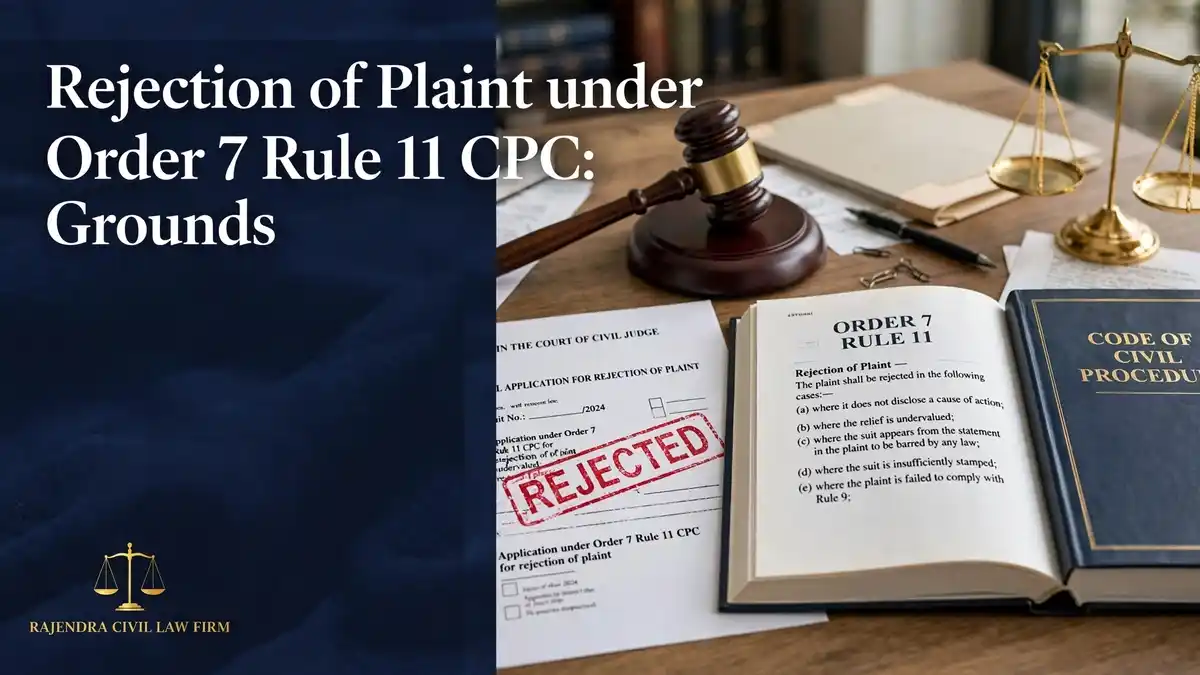
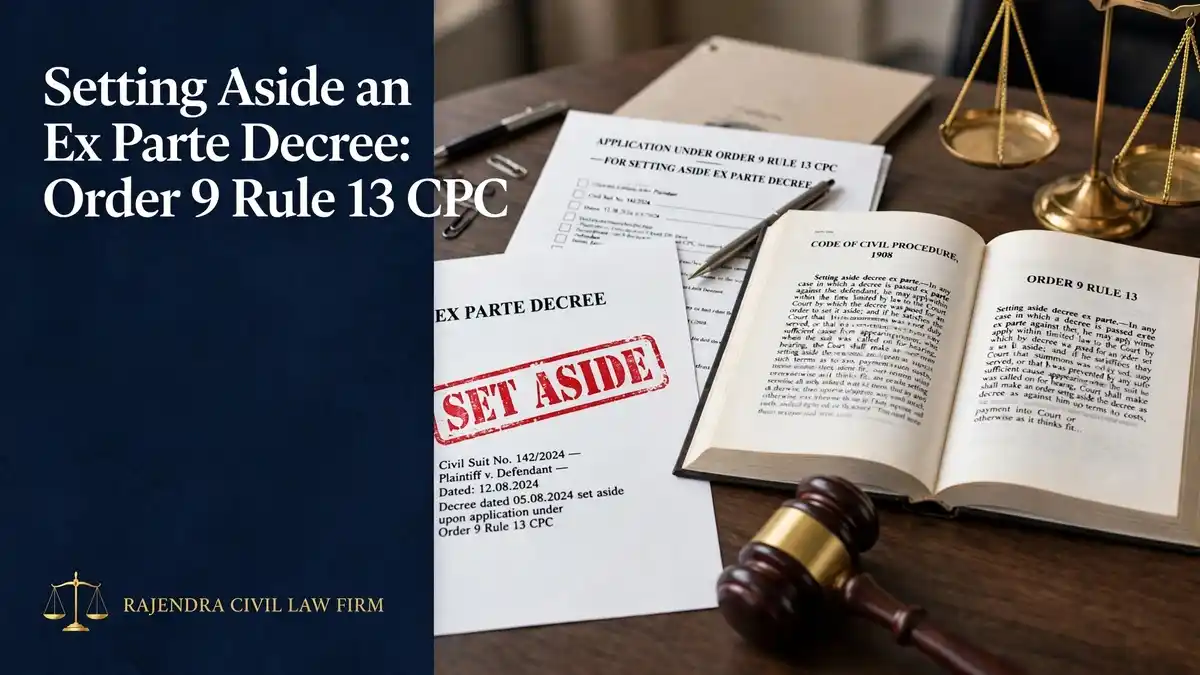
Related topics: if the plaint itself is defective, see rejection of plaint under Order 7 Rule 11 CPC. If you were not served properly and a decree has been passed, see setting aside an ex parte decree under Order 9 Rule 13 CPC. For quick recovery suits, read summary suit under Order 37 CPC. The Code is on India Code.
Frequently Asked Questions
What is a written statement?
It is the defendant’s formal reply to the plaint, filed under Order 8 CPC, admitting or denying the plaintiff’s allegations and stating the defendant’s own case.
What is the time limit to file it?
Thirty days from the service of summons, extendable up to ninety days for reasons recorded by the court. In commercial suits the outer limit is applied strictly.
What is a counterclaim?
It is the defendant’s own claim against the plaintiff, raised in the same suit under Order 8 Rule 6A. The court can decide it along with the plaintiff’s claim.
Is court fee payable on a counterclaim?
Yes. A counterclaim is treated as a plaint, so the court fee payable on the relief claimed has to be paid.
What happens if I do not file a written statement?
The court may pass judgment against you or make other orders under Order 8 Rule 10. It may also allow late filing if there is a good reason and the delay is not excessive.
Can I take a new defence later?
New defences should be pleaded in the written statement. Raising them later requires permission to amend the pleading, and the court may refuse if there is delay or prejudice.
Do I need to file documents with the written statement?
Yes. Documents relied upon should be filed along with it under Order 8 Rule 1A. Late documents may be refused unless the court permits.
This article is general legal information and not a substitute for advice on your specific case. Consult an advocate before acting.
This article is part of our guide: How to file a civil case in Chennai ?.